
Choosing the Right Manufacturing Method
Selecting the right production process can have a major impact on cost, precision, and scalability. Two of the most widely used manufacturing techniques are metal stamping and CNC machining. Both can deliver outstanding quality, but each has its strengths and limitations depending on your design, budget, and volume requirements.
At McLar, precision and reliability define every project. With decades of experience in metal stamping services, McLar supports manufacturers across automotive, electronics, and industrial sectors with parts that meet exacting tolerances and deadlines.
This guide explores how metal stamping compares with CNC machining, and how to determine which approach best suits your production goals.
Understanding Metal Stamping
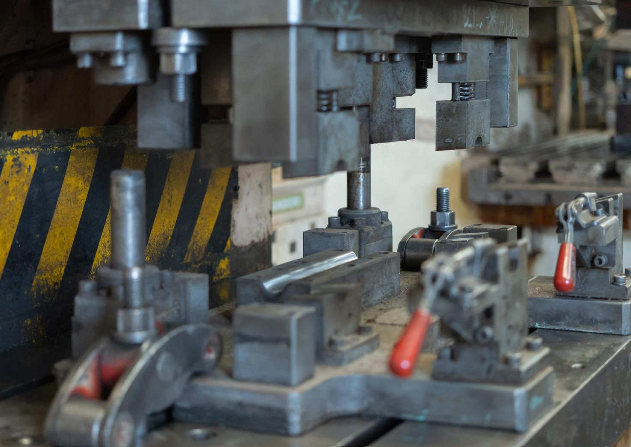
Metal stamping is a high-speed process that shapes flat sheet metal into specific forms using dies and presses. It is ideal for high-volume production where repeatability, accuracy, and cost control are essential.
McLar’s metal stamping services include blanking, punching, bending, and forming. Each process is performed on precision machinery designed to maintain uniformity across thousands of components. For clients who require complex geometries, McLar’s toolroom creates and maintains custom dies to ensure long-term performance.
Understanding CNC Machining
CNC machining removes material from a solid workpiece using computer-controlled tools. It is ideal for low to medium-volume production or for parts requiring intricate details and tight tolerances.
Unlike stamping, CNC machining is more flexible during the prototyping and testing phase. It allows for design changes without the cost of new tooling, but each part generally takes longer to produce and is more expensive per unit compared with stamped components.
Comparing the Two Processes
| Factor | Metal Stamping | CNC Machining |
| Best for | High-volume, repeatable parts | Low-volume, highly complex parts |
| Tooling cost | High initial, low per-part | Low initial, higher per-part |
| Material waste | Minimal | Moderate |
| Production speed | Very fast | Slower |
| Surface finish | Excellent | Excellent to superior |
| Design flexibility | Fixed once tooling is made | Easy to modify |
Both methods deliver accuracy and reliability, but your choice depends on long-term production goals and part complexity.
When to Choose Metal Stamping
If your business requires thousands of identical components produced quickly and economically, metal stamping services are the clear choice. Once tooling is built, stamping delivers high-volume output at a low cost per part. It is particularly efficient for brackets, housings, connectors, and enclosures.
Example:
A UK-based electronics firm partnered with McLar to produce precision brackets. CNC machining initially provided flexibility during the design phase, but once production scaled, switching to stamping reduced costs by 60% and shortened delivery time from two weeks to three days.
When to Choose CNC Machining
CNC machining excels in flexibility and customisation. It is often preferred for prototype development, smaller batches, or parts requiring deep cavities or complex internal features.
For components that need frequent design adjustments or low production runs, CNC machining remains a smart investment. However, as volumes grow, costs typically favour stamping.
McLar’s Hybrid Expertise
McLar’s strength lies in its ability to offer both metal stamping and in-house toolmaking, ensuring the best of both worlds. Their engineers often begin with CNC prototyping to perfect the design before transitioning to high-volume stamping. This approach ensures that tooling is precise, functional, and ready for scale-up.
Their in-house toolroom, equipped with CNC mills, EDM, and grinding machinery, allows McLar to maintain, modify, or repair tools on-site. This flexibility ensures uninterrupted production and consistent quality.
Sustainability and Efficiency
Efficiency is central to McLar’s philosophy. Their stamping operations are designed to minimise material waste through optimised nesting and precision cutting. Recycled metals are reintroduced into the supply chain, helping clients meet sustainability goals while maintaining cost-effectiveness.
The company’s commitment to sustainability extends across all services, including injection moulding, toolmaking, and stamping.
The Right Process for Your Project
Both metal stamping services and CNC machining have their place in modern manufacturing. For high-volume, repeatable components, stamping offers unbeatable efficiency. For low-volume or complex parts, CNC machining delivers precision and design flexibility.
By working with McLar, you do not have to choose between the two. Their engineering expertise allows clients to transition smoothly from prototype to production while maintaining control over cost, quality, and delivery.
Ready to find the right manufacturing solution? Explore McLar’s metal stamping services or speak with a specialist about your production goals.